LogoGeode
Chapter 47

The Thunder Eggsof Central Oregon

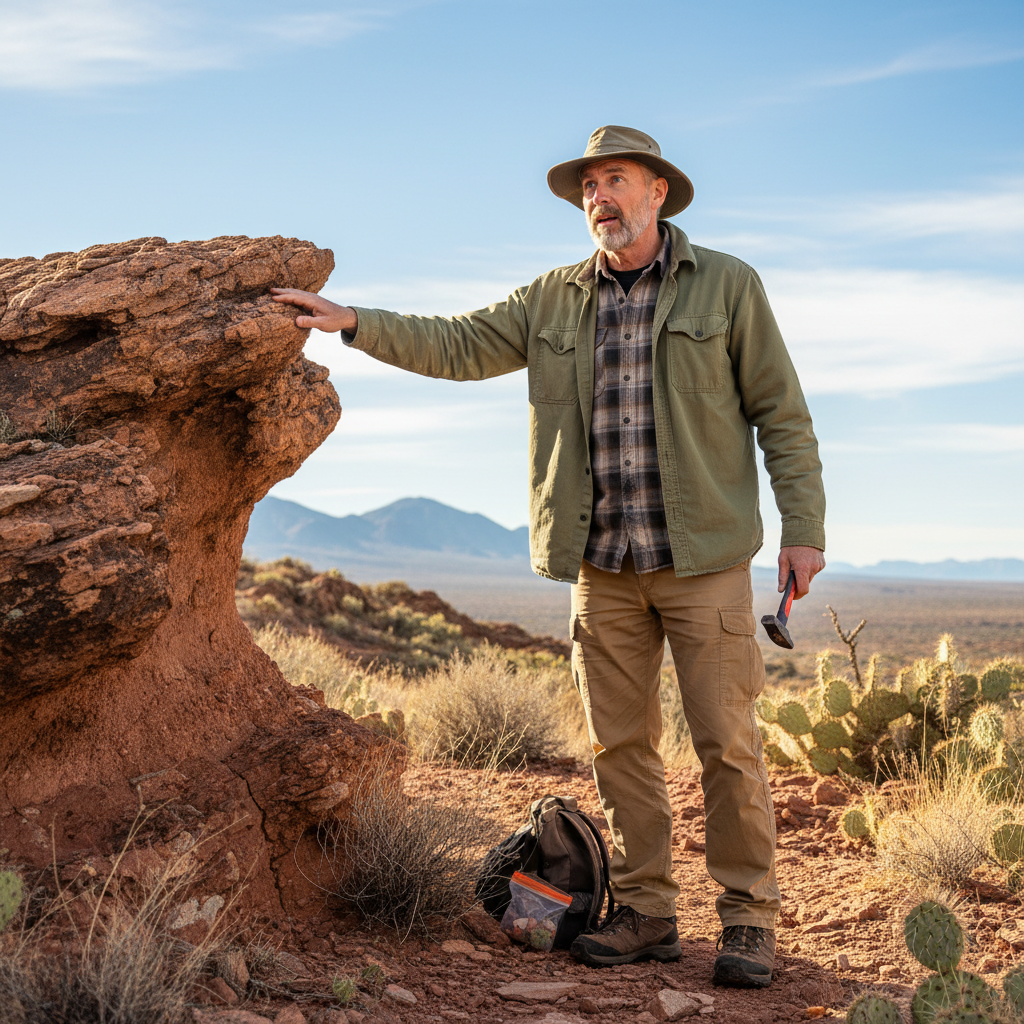
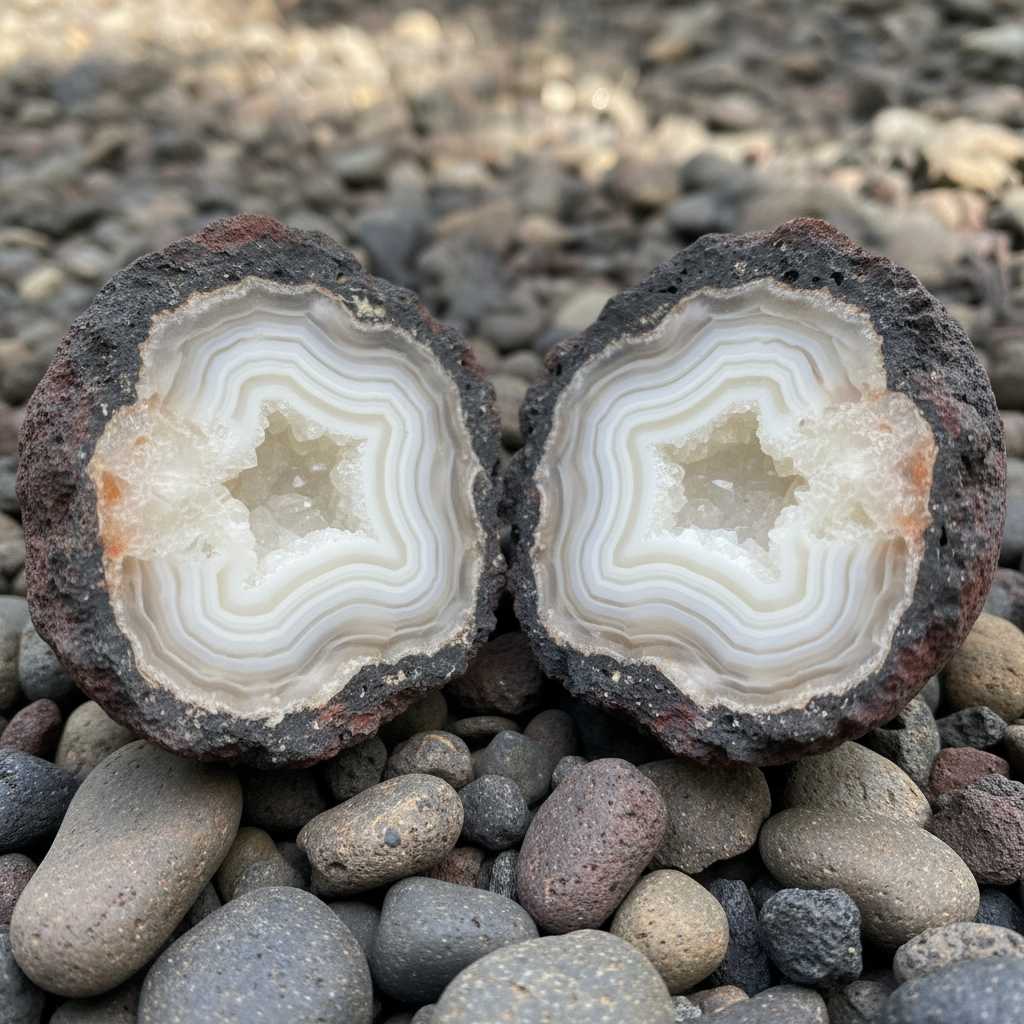
Driving out before dawn to the high desert near Prineville, where the volcanic tuff hides chalcedony nodules in every hillside. A field report on finding, cracking, and reading the rings inside.

Thunder EggsOregonChalcedony
Open the Field Guide
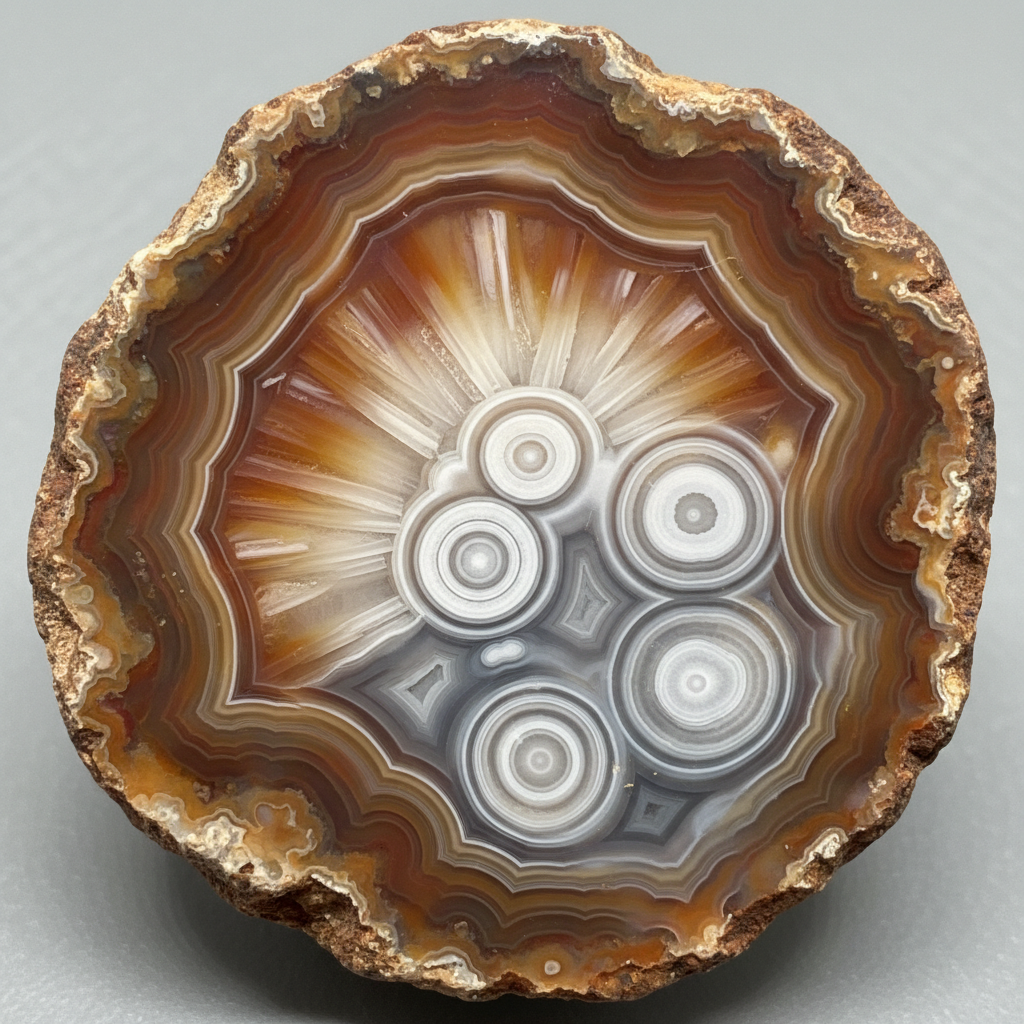
Freshly cracked thunderegg revealing banded agate interior — white chalcedony rings against dark volcanic rind
Marcus Delgado, field rockhound and contributor

Marcus Delgado

Rockhound · Prineville, OR

44.3012° N, 120.8352° W

February 14, 2026 · 5:42 AM

Scroll
Chapter 48
AgatesField Report

Reading the Creek
before the sun does

Priya Nair, lapidary hobbyist from Spokane Washington

Priya Nair

Lapidary hobbyist · Spokane, WA

47.6601° N, 117.4260° W

February 20, 2026

The Palouse River gives up its agates only at certain water levels — too high and they're buried in silt, too low and the exposed gravel has already been picked clean by every other rockhound who woke up early that week. I've learned to watch the USGS gauge at Hooper and drive out when it drops below 3.2 feet.

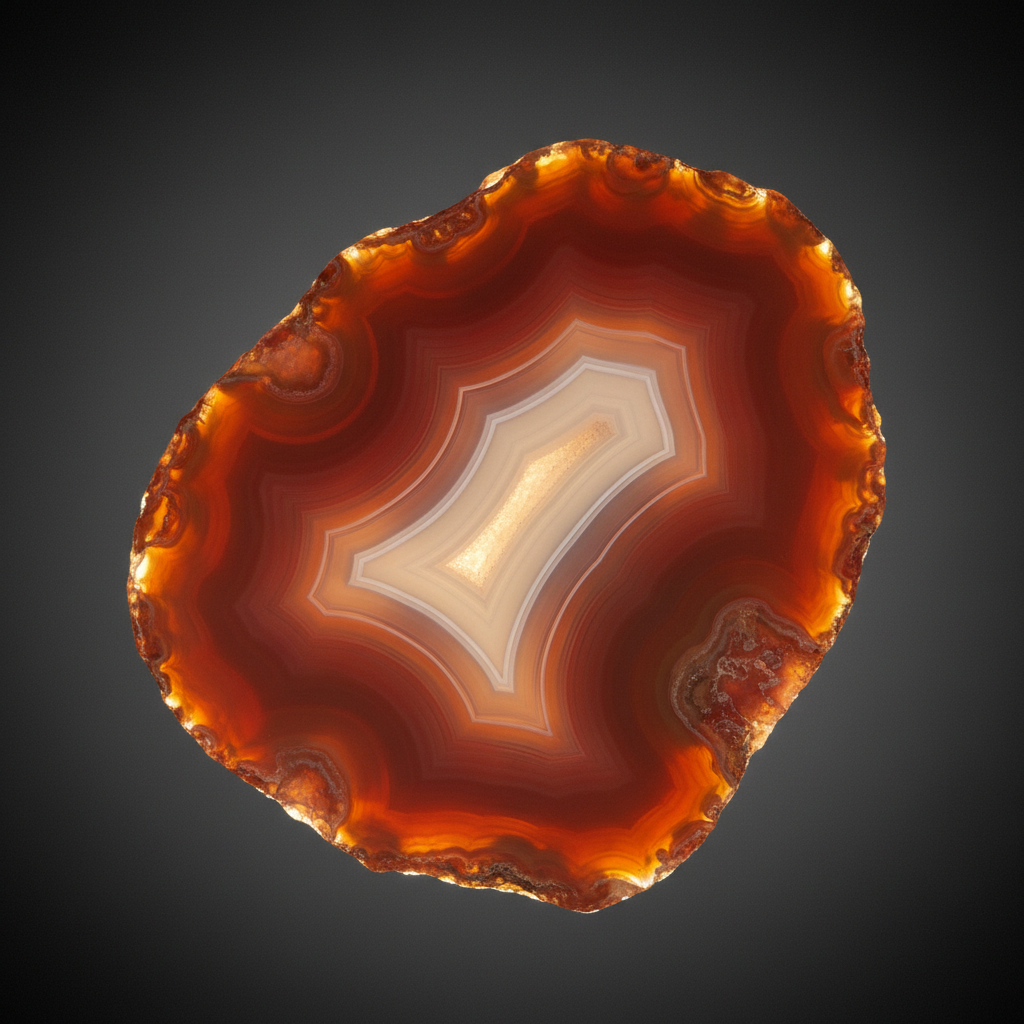
The best material is always under the cut banks where the current slows and drops its cargo. Carnelian-banded fortification agates, some with plume inclusions, all worn smooth by the river's long patience. I fill a five-gallon bucket and spend the drive home listening to them knock together in the dark.
3.2 ftIdeal gauge
47 miDrive from Spokane
~8 lbsAvg haul
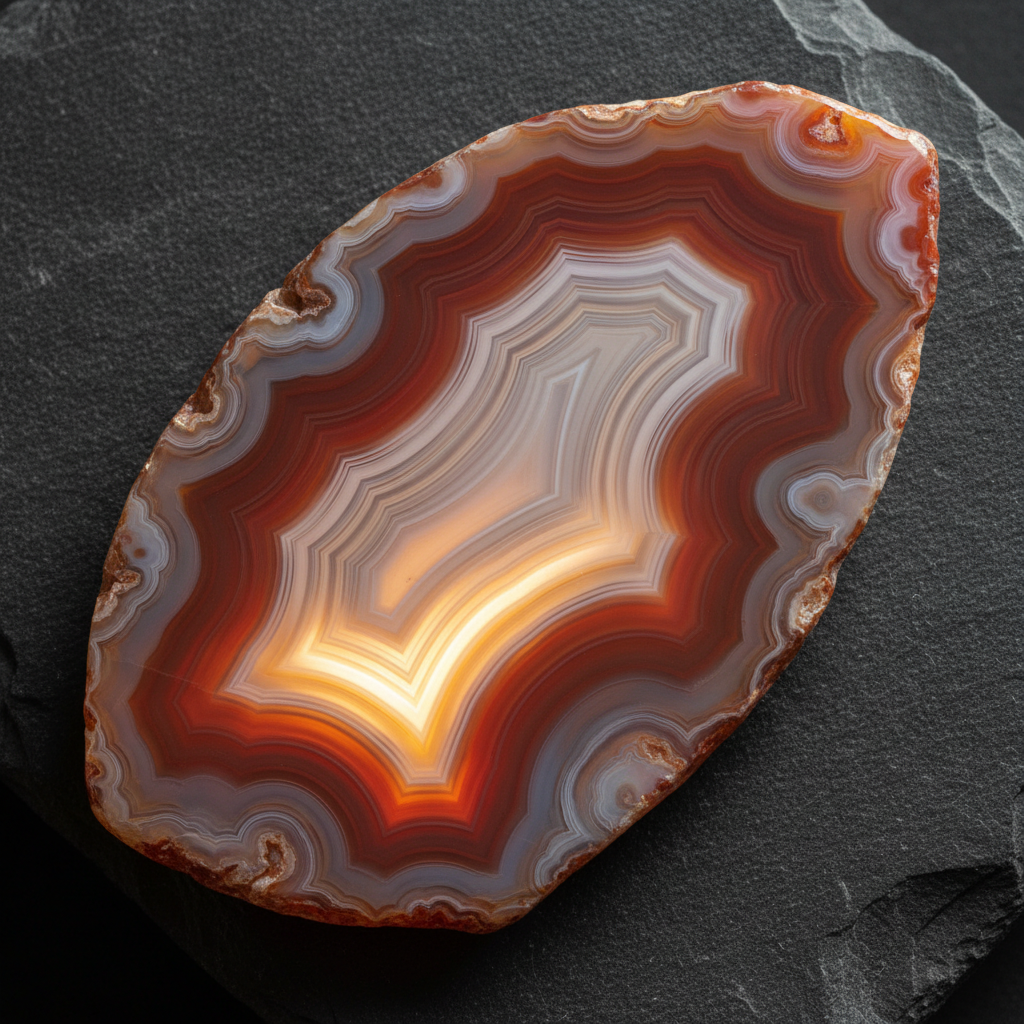
Translucent banded agate with carnelian and white fortification rings against a dark background

Fortification Agate — Palouse River, WA

"The river doesn't give anything up easily. But when it does, it gives you something it's been shaping for twelve thousand years."

Priya Nair

Ch. 48 of the Geode Journal
Chapter 49
TutorialLapidary

The First Cut
is always the hardest

James Kowalski, geology teacher from Flagstaff Arizona

James Kowalski

Geology teacher · Flagstaff, AZ

35.1983° N, 111.6513° W

February 17, 2026

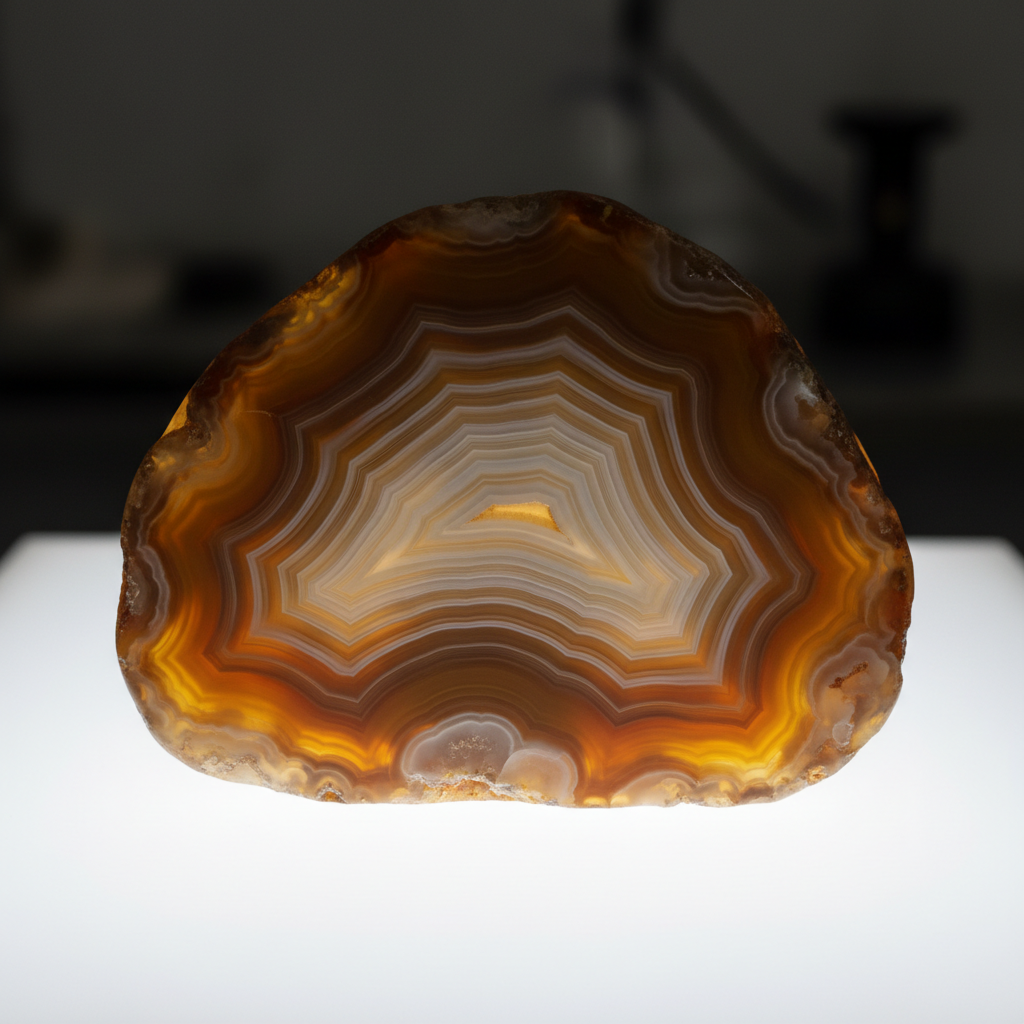
My students always want to cut the specimen before they've studied it. I make them hold it up to a backlight first — a cheap LED panel works fine — and trace the banding with a marker. That line becomes your trim saw path. You're not cutting rock, you're revealing a cross-section that's been there for 200 million years.

The trim saw runs at 1,725 RPM with a 6-inch diamond blade. Use a light feed pressure and let the blade do the work. Forcing it heats the blade and fractures the specimen. Once you've made the first slice, you'll see the interior for the first time. That's the moment I've never gotten tired of, no matter how many cuts I've made.

1,725RPM blade speed
6 inDiamond blade
~3 minPer inch of material
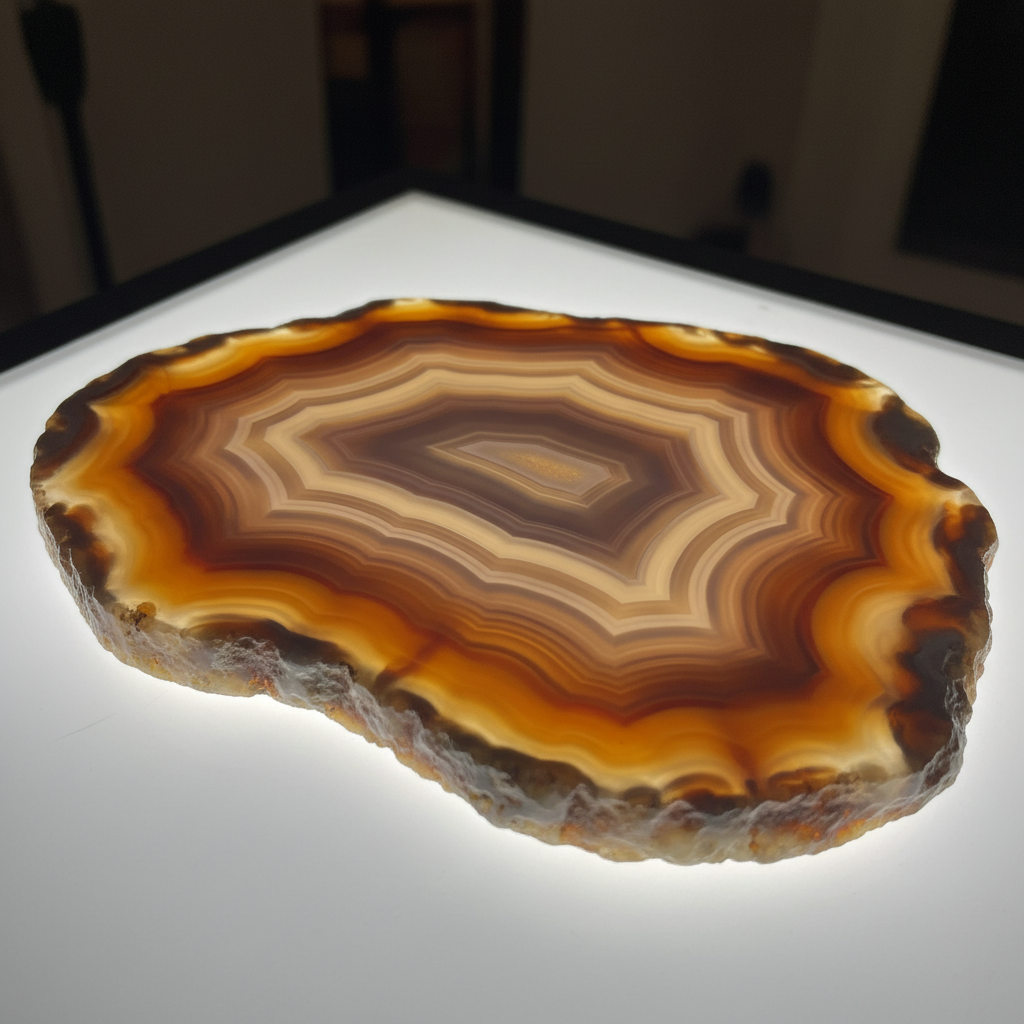
Cross-section of polished agate slab showing concentric banding in amber and white tones on a light table

Trim saw path — 6-inch diamond blade

"Hold it to the light before you ever pick up the saw. The stone will show you exactly where to cut."

James Kowalski

Ch. 49 of the Geode Journal
Chapter 50
Trip ReportDesert

Dump Rock
and what it tells you

Leila Okafor, weekend rockhound from Las Vegas Nevada

Leila Okafor

Weekend rockhound · Las Vegas, NV

35.6878° N, 115.4200° W

February 10, 2026

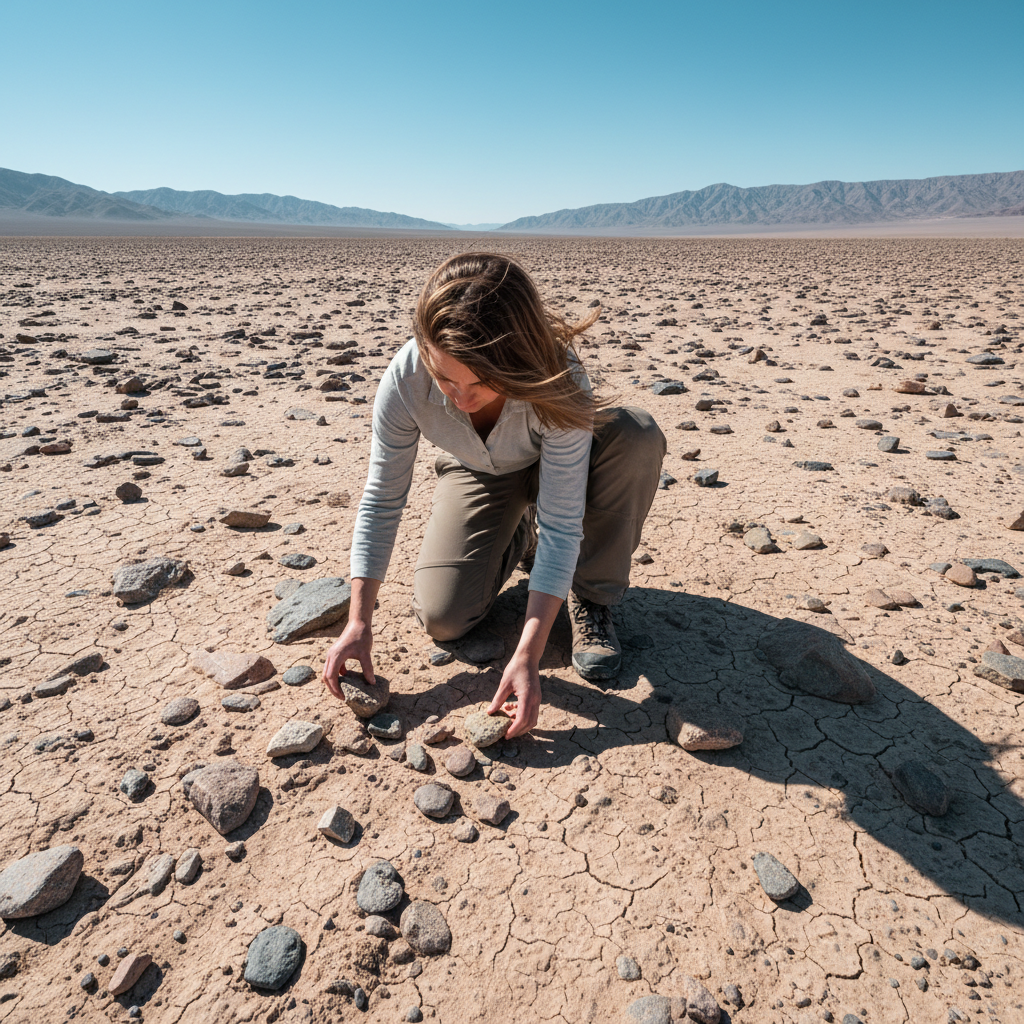
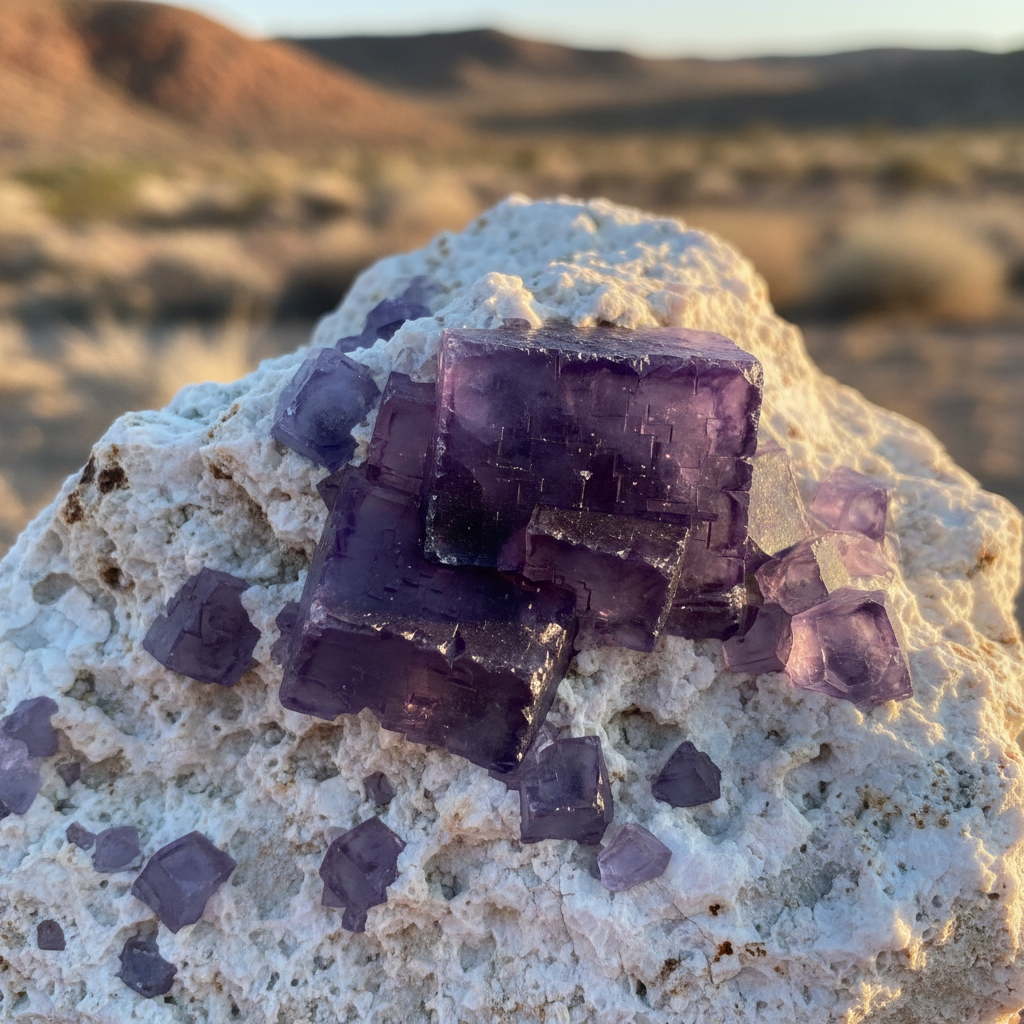
The tailings pile outside an abandoned silver mine isn't where you find silver. It's where the miners threw everything they didn't want — which is almost always everything a rockhound does want. Fluorite, quartz crystals, occasional wulfenite plates still clinging to their host rock. You're sorting through someone else's waste and finding treasure.

The Bureau of Land Management maintains a list of claims that have been abandoned for more than 10 years, and most of the Mojave's old workings fall in that window. Check the list, check the GPS coordinates against current satellite imagery for any new activity, then drive out at first light when the low sun throws every crystal's shadow across the dump. You'll see things you'd miss at noon.

10 yrBLM abandonment window
6 AMBest light for crystals
3+ hrsDrive from Las Vegas
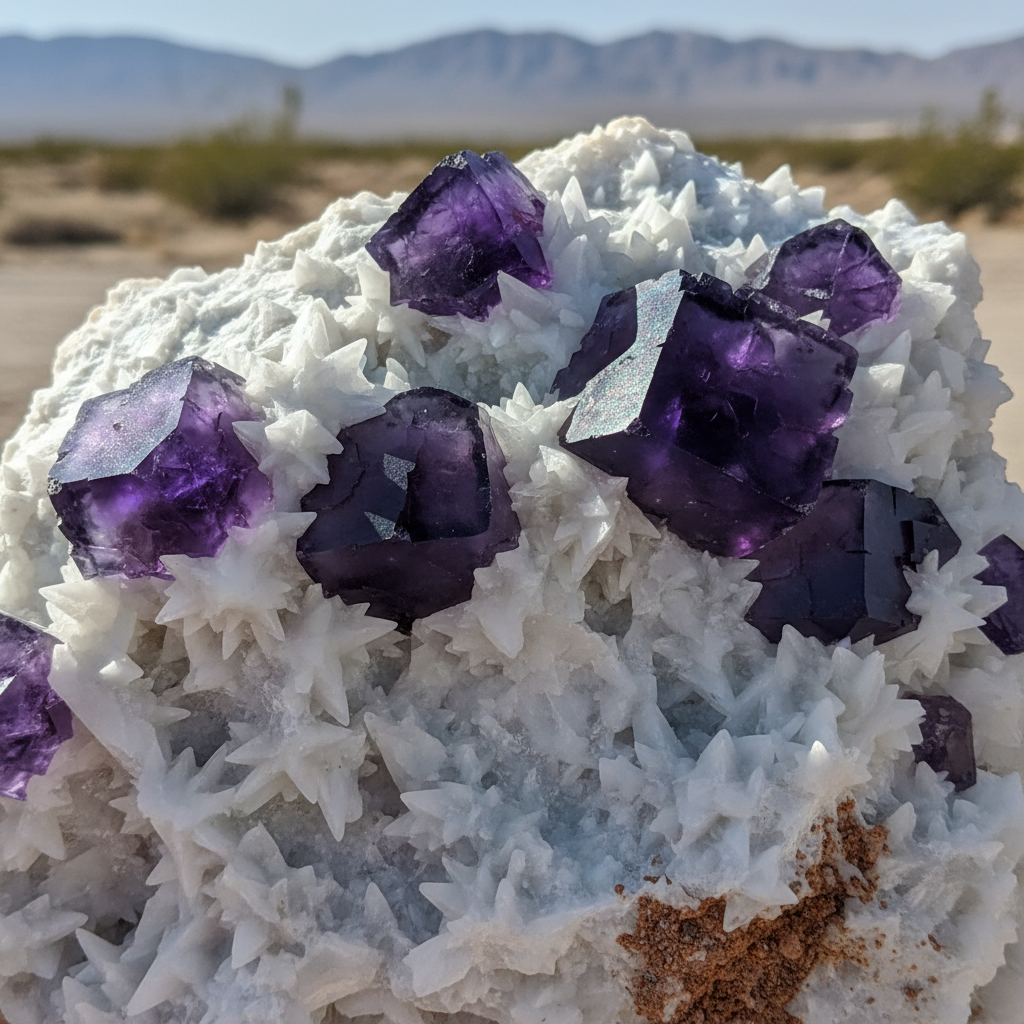
Purple fluorite crystals on white matrix from Mojave desert mine tailings, vivid violet color against pale host rock

Fluorite on calcite matrix — Mojave tailings

"Every abandoned mine is a curated collection — someone already sorted out the country rock. You just have to look at what they left behind."

Leila Okafor

Ch. 50 of the Geode Journal
Free Resource
PDF Download

The Geode
Field Guide

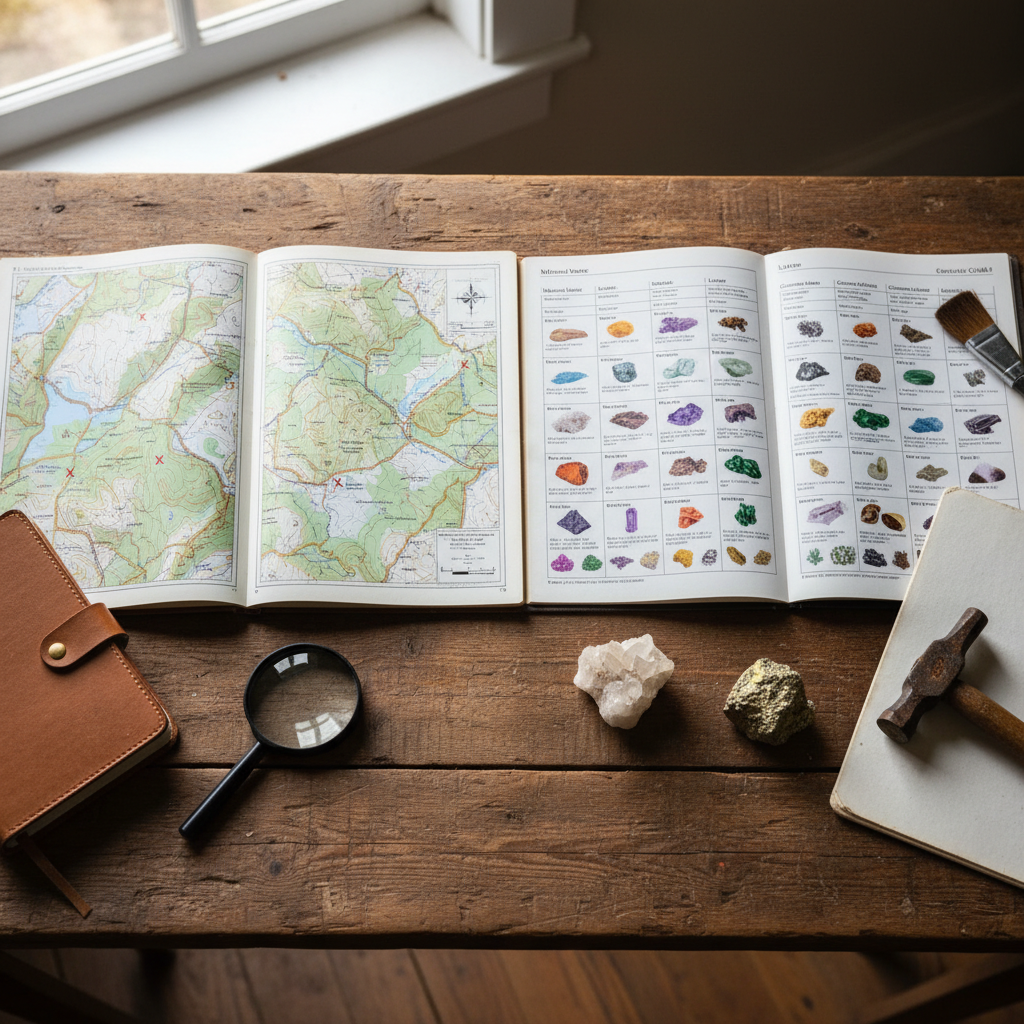
Thirty-two pages of regional rockhounding maps, mineral identification charts, and dig-site coordinates — compiled from three years of community trip reports. Enter your zip code and we'll send you the edition for your region.

14 regional maps

Pacific NW, Southwest, Midwest

ID charts for 60 minerals

Agate, jasper, fluorite, and more

38 dig-site coordinates

GPS-verified, BLM-legal access

Lapidary quick-start

Trim saw, tumbler, and cab settings

Spread of rockhounding field guide pages showing topographic maps and mineral identification charts

Geode Field Guide · Vol. 3 · 2026 Edition

Get your regional edition

One email. We'll match your zip code to the right edition and send it straight to your inbox — no account required.

Used only to match you with the right regional maps.

Free forever. No spam. Unsubscribe with one click.

4,200+ rockhounds have downloaded this guide

Updated every season with new community finds

Covers 14 states across the American West

Community Contributions
Open Submission

Share your find.
Add to the journal.

Every issue of Geode begins as a community submission. Upload a photo of your best find — a thunderegg, a fluorite plate, an agate you pulled from a creek last weekend — and tag it with a location. If we feature it, we'll reach out for the full story.

"The campfire goes around. You show yours, I'll show mine. That's how rockhounds have always worked."

— Geode Community, est. 2021

Recent contributors

Marcus Delgado contributor portrait
Priya Nair contributor portrait
James Kowalski contributor portrait
Leila Okafor contributor portrait
Community contributor portrait
+312 this month
01

Upload your photo

JPG or PNG, any resolution

02

Tag the location

City, state, or GPS coordinates

03

We review & feature

Selected finds go into the next issue

Drop your specimen photo here

or click to browse — JPG, PNG, HEIC